

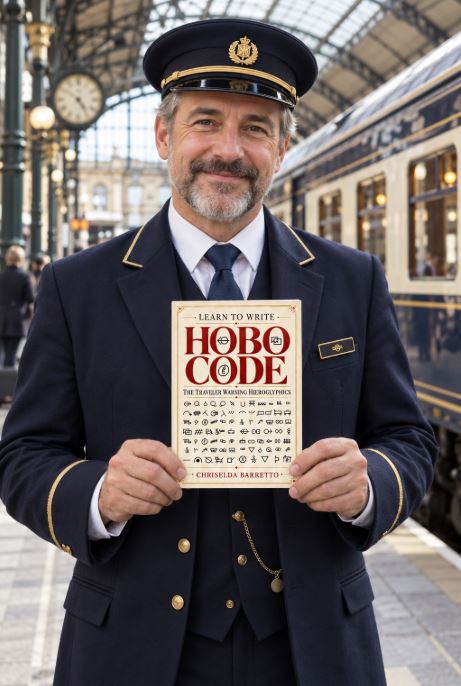
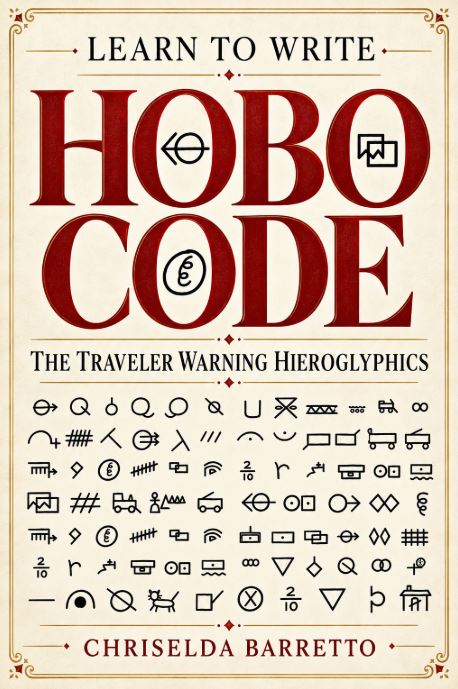
Hobo code is a collection of simple symbols traditionally said to help travellers find food, work, shelter and safety. Think of it as a pocket-sized survival guide left on a fence post—although its widespread historical use remains debated.
Hobo culture grew alongside America’s expanding railroads after the Civil War, long before the Great Depression. Travelling labourers moved between places looking for work, and information about the next town could be valuable.
The signs represented whole messages rather than letters. Published charts included meanings such as “food available,” “work for a meal” and “keep moving.” A top hat, for example, was said to indicate that a wealthy man lived nearby.
According to traditional accounts, travellers drew signs with chalk or charcoal on posts, fences and other visible surfaces. These materials washed or wore away, making the messages temporary.
There is no single official hobo-code dictionary. Different charts show different symbols and meanings, so a sign’s interpretation depends on the collection being used.
One famous traveller, Leon Ray Livingston, used the name A-No. 1 and helped popularise hobo signs through his writings. His 1911 book Hobo-Camp-Fire-Tales contributed to the stories surrounding this mysterious “language of the road.”
Get LTW HOBO CODE – Paperback on Amazon:


The entire LTW Language Learning Series
Chriselda Barretto – Entire Kids Books Collection
Chriselda Barretto – Entire Book Collection
Chriselda Barretto – Jewelry Collection
Specialized Chris-Tal Healing Bracelets
OTHER PROJECTS BY CHRISELDA BARRETTO
CHRISELDA’S PRE-ORDER COLLECTION
CHRISELDA BARRETTO – SOCIAL MEDIA LINKS

